
By The pep patch team, Product & formulation
Published · 5 min read
If you've read the back of an eye patch box recently, you've probably seen copper tripeptide-1 listed somewhere in the middle. That's GHK-Cu. It's one of the more talked-about cosmetic ingredients of the last few years, and also one of the most badly explained.
The short definition
GHK-Cu is a peptide — a very short chain of amino acids — bound to a copper ion. The letters are the amino acids themselves: glycine (G), histidine (H) and lysine (K). The Cu is copper, from the periodic table. Put together: a three-amino-acid chain carrying copper.
It occurs naturally in human plasma, and it has been used in cosmetic formulation for decades. On an ingredient list it appears under its INCI name, copper tripeptide-1, because INCI names are standardised worldwide so the same ingredient reads the same in Seoul, Sydney and Ohio.
Why it's blue
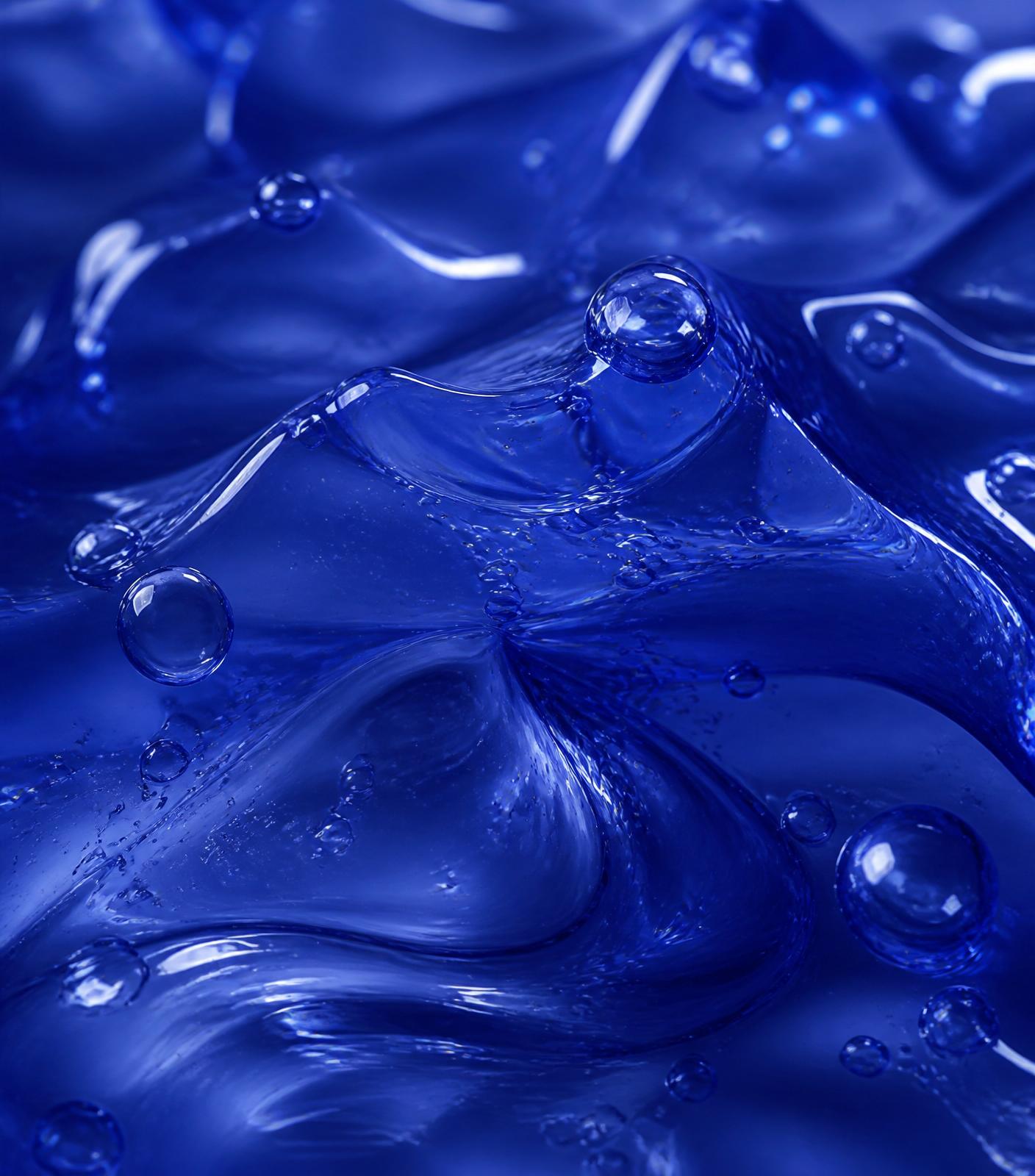
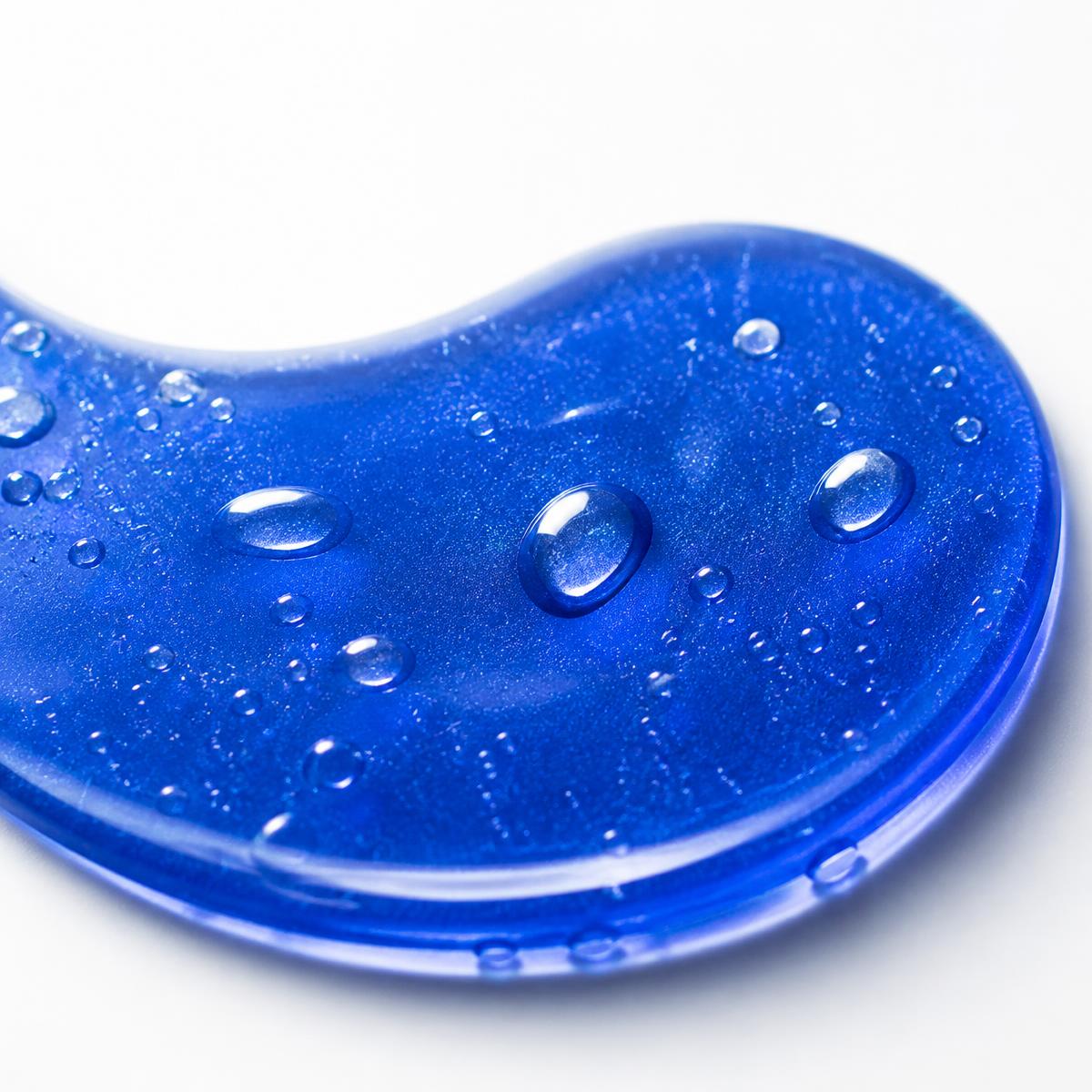
The colour isn't a dye. Copper complexes in water are genuinely blue, and GHK-Cu is no exception. When you open a pep patch sachet and the gel is a clear cobalt, that colour is the ingredient itself sitting in a water-rich matrix.
It's a nice piece of honesty in a category full of added colourant. It also means the colour tells you something: a copper peptide product that is bright white has either very little copper peptide in it or something else going on.
What it's used for in cosmetics
In cosmetic terms, GHK-Cu is used as a skin-conditioning agent. That's the actual regulatory function class, and it's a deliberately modest phrase: it means the ingredient is there to help skin look and feel better — softer, smoother, more comfortable — rather than to treat a condition.
You'll find plenty of enthusiastic claims online that go much further than that. We're not going to repeat them. Cosmetics are regulated as cosmetics, and a copper peptide in a fifteen-minute eye patch is a cosmetic.
What GHK-Cu is not
- It is not a drug, and it is not a medical treatment for any eye or skin condition.
- It is not a retinoid. It doesn't work the way retinol works and it isn't a replacement for one.
- It is not an exfoliant, so it doesn't have the sting-then-peel arc people associate with acids.
- It is not the same thing as 'copper' in a supplement. Free copper and a copper-bound peptide behave differently in a formula.
Why it suits a patch
GHK-Cu likes water. It's delivered from a water-rich base, which is exactly what a gel eye patch is: mostly water, held in a soft matrix, pressed against the skin so it can't evaporate the way a serum does.
That's the practical argument for a patch over a cream. A serum on the under-eye is dry in ninety seconds. A patch keeps the same ingredients in contact for fifteen minutes, and the occlusion is doing as much work as anything in the bottle.
How to spot it on a label
Look for copper tripeptide-1. Ingredient lists run in descending order of concentration down to 1%, after which the order is up to the manufacturer — so an active sitting in the back half of a list is normal, not a red flag. If you want to get better at reading these, our ingredients page lays out our full list with a note next to every line.
That's the whole ingredient. Not magic, not medicine: a small blue peptide that formulators like, in a format that keeps it where you put it.
frequently asked
- How do you pronounce GHK-Cu?
- Say the letters: G-H-K, then 'copper' or 'C-U'. Both are common.
- Is GHK-Cu the same as copper peptides?
- GHK-Cu is the specific copper peptide most products mean when they say 'copper peptides'. Its INCI name is copper tripeptide-1.
- Will copper peptides stain my skin?
- They can leave a faint blue tint while wet, which disappears as the product absorbs or when you rinse. It's the copper complex, not a dye.
- Is GHK-Cu safe around the eyes?
- It's widely used in eye-area cosmetics. As with any product, avoid getting it in the eye itself, and stop if your skin becomes irritated.
Related articles
Cosmetic information only. pep patch™ is a cosmetic product and is not intended to diagnose, treat, cure, or prevent any disease.