
By The pep patch team, Product & formulation
Published · 5 min read
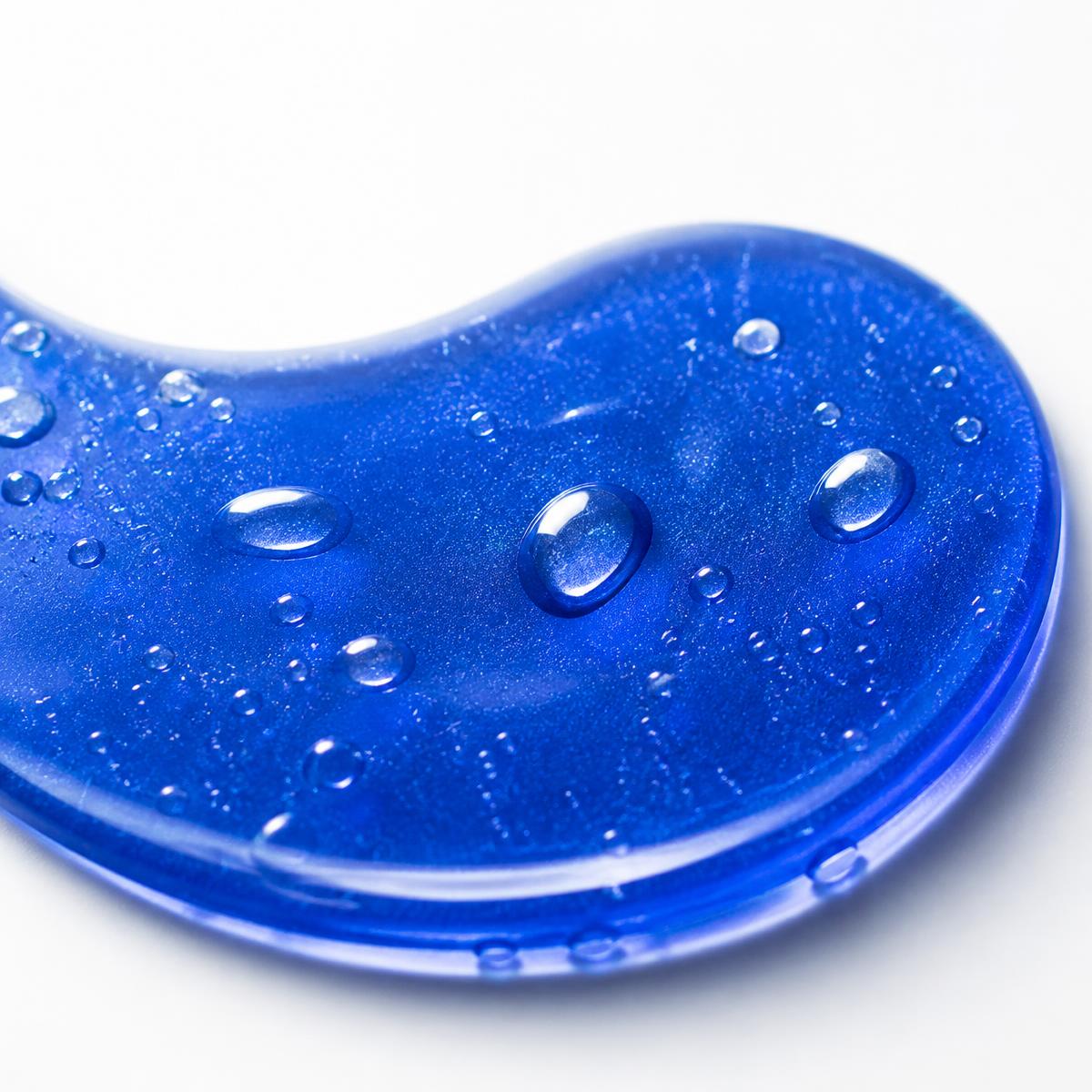
A gel eye patch looks like a piece of technology and is, structurally, one of the simplest things in your bathroom. Strip the marketing off and there are four parts: a matrix, water, actives, and the system that keeps it all from spoiling.
The gel matrix
The wobble comes from a gelling agent — typically a polysaccharide such as agar or a carrageenan, both derived from seaweed, sometimes alongside glycerin-based polymers. Its job is purely physical: hold a large volume of water in a shape that stays put on a curved, moving face for fifteen minutes.
That's also why patches feel cool. A water-heavy gel sitting against warm skin pulls heat out of it. There's no cooling agent needed for that; it's thermodynamics, and it's why a chilled sachet feels dramatic.
Water and humectants
Water is usually the first ingredient by a wide margin. Next come humectants — glycerin, hyaluronic acid, sometimes butylene glycol — which attract water and hold it near the skin surface. Under a patch, that water can't evaporate, which is the real advantage of the format over a serum.
The actives
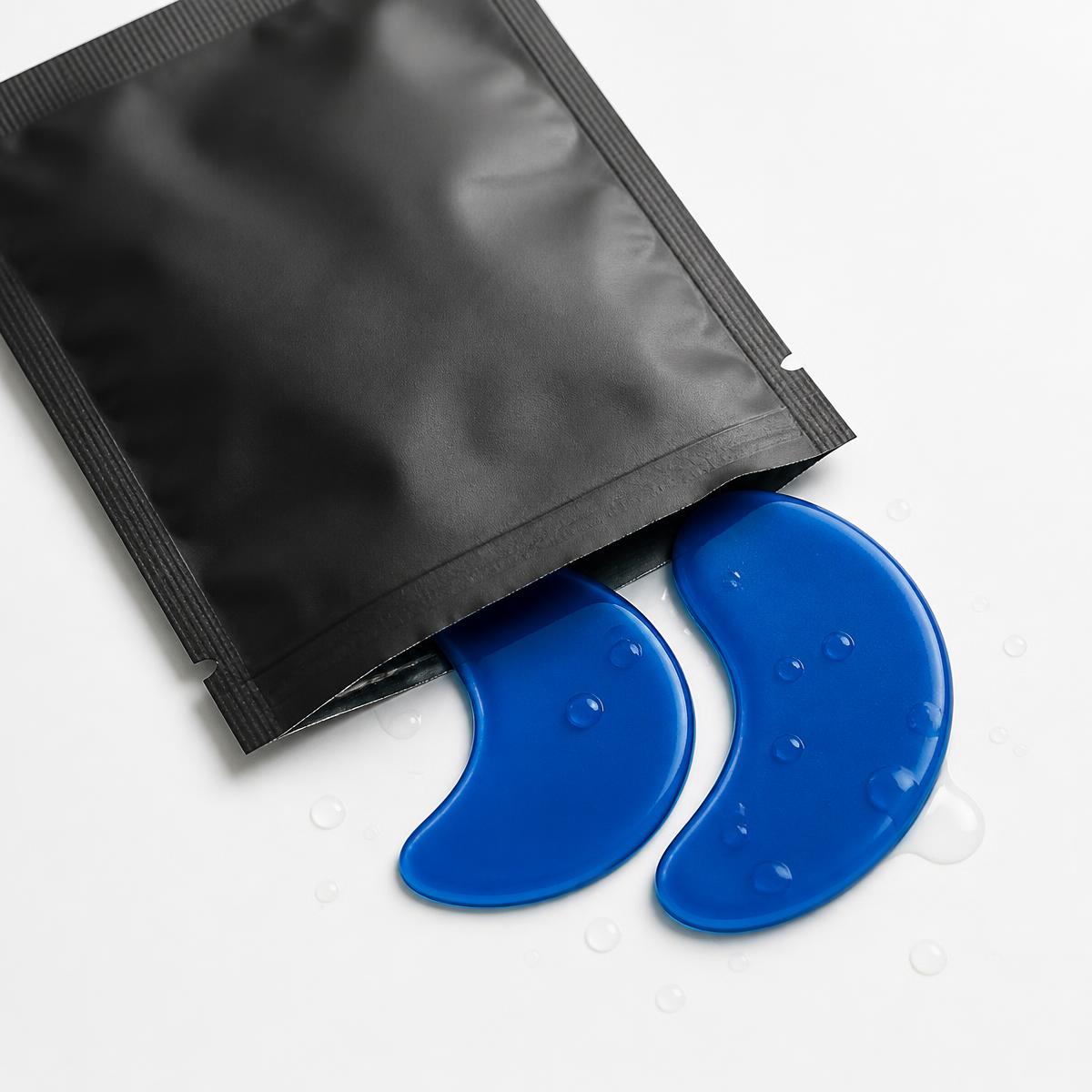
- GHK-Cu (copper tripeptide-1) — the skin-conditioning copper peptide, and the reason ours is blue.
- Niacinamide — used to support the look of an even tone and a comfortable barrier.
- Panthenol — a humectant and soothing agent, common in products for delicate skin.
- Hyaluronic acid — a water-binder that gives the surface a plumper look while hydrated.
Preservation, and why it matters
A product that is 80-plus percent water, packaged wet, and touched with fingers needs a preservative system. This is not the scary part of the label — it's the responsible part. An unpreserved water-based product is a microbiological problem waiting to happen, and single-use sachets exist partly for the same reason: you open it, you use it, nothing sits half-open on a shelf.
How to read the label
- Ingredients run in descending order of concentration down to 1%. Below that, order is up to the manufacturer.
- Water first is normal and expected in a gel patch.
- An active listed after the 1% line is not automatically a token amount — most actives are used well under 1%.
- Fragrance appears as 'parfum' or 'fragrance'. If it isn't there, there isn't any.
Our full list is published with a plain note next to every line, including the boring ones. If you want to compare ours against anything else on your shelf, that page is the place to start.
frequently asked
- Are eye patches just water?
- Mostly, yes — water is typically the first ingredient. The gel matrix holds it against the skin, which is what makes the format work.
- What makes eye patches stick?
- The gel itself. Surface tension between a wet gel and skin is enough; there's no adhesive involved.
- Why do eye patches need preservatives?
- They're water-based and opened by hand. A preservative system keeps the product safe to use.
- Are gel patches and hydrogel patches the same thing?
- The terms are used interchangeably in marketing. Both describe a water-rich gel matrix cut into an under-eye shape.
Related articles
Cosmetic information only. pep patch™ is a cosmetic product and is not intended to diagnose, treat, cure, or prevent any disease.